
PLASP Programs Foster Curiosity and Allow Children To Explore.
Children are at the centre of everything we do.
Every day, at each of our 230+ locations, we provide positive caregiving, stimulating activities, and foster positive relationships between children, educators, and families. Our programs inspire early learning and are built upon the understanding that every child is competent, capable, curious, and rich in potential.
Our goals for children, consistent with the Ministry of Education pedagogy “How Does Learning Happen? Ontario’s Pedagogy for the Early Years”, include the following four foundations.
Belonging
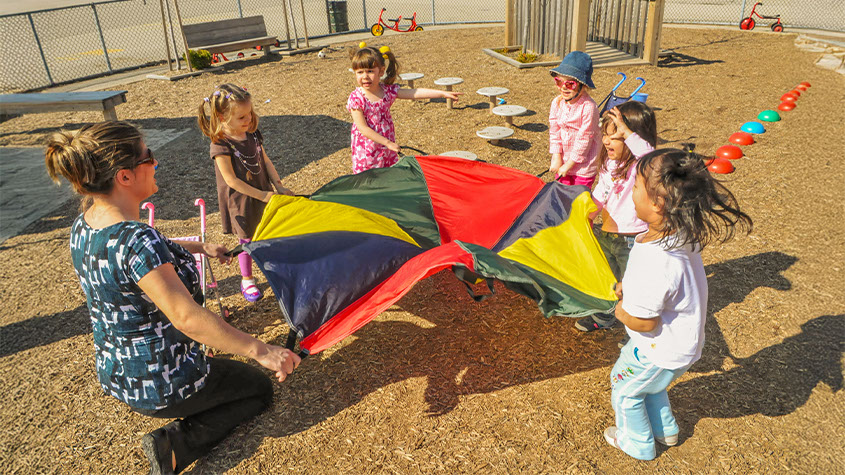
Every child has a sense of belonging when they are connected with others and contribute to the world.
What is Belonging?
“The feeling of belonging, in the widest sense, contributes to inner well-being, security and identity. Children need to know that they are accepted for who they are. They should know that what they do can make a difference and that they can explore and try out new activities… (the program) should recognize, acknowledge, and build on each child’s special strengths, and allow each to make a contribution or to make ‘(their) mark,’ acknowledging that each child has the right to active and equitable participation in the community.”
~New Zealand Ministry of Education, Early Childhood Curriculum
Belonging means feeling connected, accepted, and valued. It’s when children know they matter and are part of the group. When children feel they belong, they are more confident, willing to try new things, and able to build strong connections with the world around them.
How We Foster Belonging at PLASP
At PLASP, we create a welcoming space where children and educators build caring and trusting relationships. Every day, we encourage everyone to value and celebrate each other’s strengths, abilities, and interests.
In our group settings, children build relationships and learn to care about each other’s feelings and well-being. Activities such as group games, arts, sports, science experiments, building projects, and outdoor play give children a sense of connection and identity. A sense of belonging also means that we celebrate diversity by including different traditions, languages, and perspectives in our programs.
PLASP educators take the time to know each child’s unique personality and passions, and work closely with school staff and families to create a strong sense of community. We keep families connected through emails, newsletters, social media updates, and we build bridges between children’s experiences at PLASP, school, home, and the broader community.
PLASP builds its programs upon inclusive policies, and we strive to accommodate children of all abilities at all of our 230+ locations. PLASP’s community partners support our programs and families with consultations, resources, program quality improvement recommendations, and individual support plans for children where appropriate. Together, we strive to meet the needs of all of our children.
We also work with school boards, local and provincial government, colleges/universities and social services agencies, to ensure our programs help every child feel they belong and reach their full potential.
How Can You Help Build a Sense of Belonging?
- Share your ideas and suggestions: They help our programs grow and inspire experiences that match children’s interests.
- Visit your child’s program: Spend time observing where your child learns, plays, and connects with peers.
- Connect with program staff: Use drop-off and pick-up times to share updates, ask questions, and strengthen communication.
- Review the parent board and program planner: Know what’s happening in the program and talk about it with your child.
- Attend an enrichment activity or special event: Your involvement celebrates your child’s learning and strengthens their sense of community.
- Share your family’s traditions, interests, and skills: This helps celebrate diversity and adds to the strengths of the whole community.
Well-Being
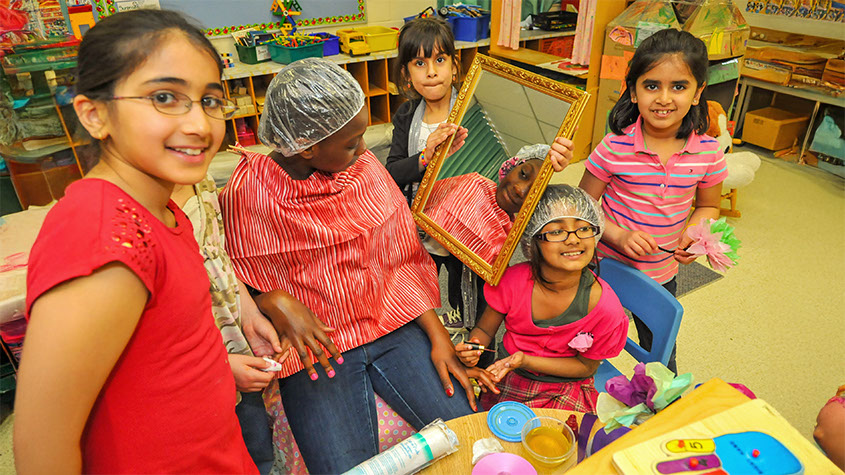
Every child is developing a sense of self, health and well-being.
What is Well-Being?
Well-being is the combination of skills, habits, and emotional awareness that help children grow to be healthy, strong, confident, and balanced. With guidance from caring adults, children build a positive sense of self, learn to make healthy choices for their mind and body, and develop constructive strategies for managing stress and handling life’s challenges.
With support from caring adults, children:
- Develop a strong sense of self and a positive identity
- Make healthy choices for both body and mind
- Show empathy and treat others with respect
- Learn strategies to manage stress and cope with challenges
- Feel safe, secure, and confident in their environment
How We Foster Well-Being at PLASP
At PLASP, we believe that children’s overall well-being is the foundation for learning and growth. We design our programs to support the physical, emotional, and social health of every child, helping them feel safe, confident, and ready to explore the world around them. Through nutritious food, daily physical activity, emotional support, and strong partnerships with families, we create environments where children can develop to their fullest potential.
Our programs nurture children’s healthy development and support their growing sense of self. We provide programs that positively influence children’s physical and mental health and well-being by offering nutritious meals and snacks that follow the Ontario Dietitians in Public Health (ODPH) Child Care Nutrition Guidelines in a positive eating environment. Each day includes indoor and outdoor physical activities that build strength, coordination, and fine and gross motor skills such as active games, dance, sports, mindfulness activities, nature walks, and community exploration. PLASP programs offer children choices in a variety of quiet and active activities. Children are also offered safe opportunities for appropriate risk-taking, allowing children to build confidence, spark curiosity, and challenge them in a supportive environment.
Our programs encourage independence by giving children the chance to serve themselves during meals, participate in clean-up routines, and care for their learning environment. Children are given meaningful opportunities to take on leadership roles, contribute to group experiences, and make choices about what and how they would like to explore.
We support emotional well-being by helping children name and express their feelings in healthy ways, while fostering empathy, kindness, and respect for others.
Predictable routines help children feel safe, secure, and confident because they know what to expect. A consistent daily routine also prepares children for transitions and supports the development of self-regulation skills. Educators guide children in developing strategies for problem-solving, managing stress, and coping with challenges.
How You Can Help Build a Sense of Well-Being
- Stay Informed: Review the menu at your child’s program each week and talk about the foods they enjoy.
- Model Healthy Living: Show your child the importance of balanced choices through your own eating, physical activity, and self-care routines.
- Promote Consistency: Encourage your child to continue following the same hygiene, movement-based, and healthy eating routines they practice in the program.
- Stay Connected: Take time to view the parent board and program planner to learn about upcoming activities and experiences.
- Build Relationships: Speak regularly with program staff to share updates and hear about your child’s experiences and achievements.
- Be Active Together: Spend time outdoors for active play, nature walks, or exploration to nurture physical and emotional well-being.
Engagement
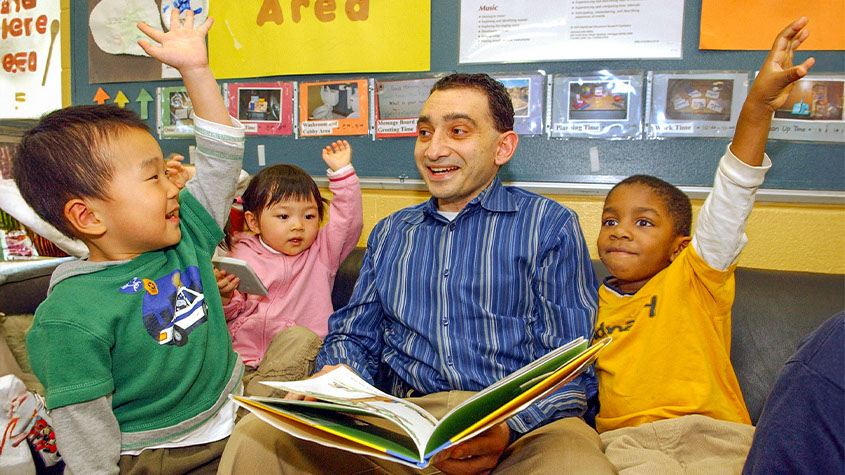
Every child is an engaged learner who explores the world with mind, body and senses.
What is Engagement?
Engagement is a state of being genuinely involved and interested in something. Children learn best when they are deeply engaged in what they are doing or experiencing. A child’s natural curiosity plays a big part in engagement. Children explore with their bodies, minds, and senses, and curiosity inspires them to ask questions, test theories, solve problems, think creatively, and make meaning of the world around them.
When children are engaged, they often work together with others, share ideas, and collaborate on projects. They have opportunities to explore a variety of materials and environments, try new strategies, and revisit their ideas over time. This process builds persistence, problem-solving skills, and confidence. Engagement sets a strong foundation for more complex and intricate learning in later life. When children are engaged, they are more likely to get along with others and be motivated to learn, while being less likely to experience stress.
How We Foster Engagement at PLASP
At PLASP, we view children as capable, curious, and active participants in their learning. We create environments and experiences that encourage learning opportunities and are meaningful to children’s lives, cultures, and interests. Educators work alongside children as co-learners, listening to their ideas, asking thoughtful questions, and providing time and materials for them to think critically, solve problems, and express themselves in creative ways.
Children are encouraged to explore a variety of open-ended materials – such as natural objects, tinkering parts, art supplies, building materials – that foster experimentation, problem-solving, and creative expression. Opportunities might include science experiments, pretend play, collaborative projects, or spending time outdoors discovering nature. These experiences invite children to test ideas, develop theories, and revisit their learning over time.
Educators and children plan activities together, often building on a shared interest that can last for days or even weeks. This shared planning process strengthens relationships, builds communication skills, and supports group problem-solving. Educators act as co-learners, participating alongside children and asking reflective questions.
Children’s choices are central to their engagement. By selecting activities that interest them, they spark their own curiosity, take ownership of their learning, and become motivated to explore further. These choices lead to meaningful questions, creative problem-solving, and new discoveries.
How You Can Help Build Engagement
- Encourage reflection: Talk with your child about what they are doing, noticing, and thinking. Ask open-ended questions like “What do you think will happen if…?” or “How did you figure that out?”
- Follow your child’s interests: Let your child take part when planning activities. Instead of picking themes for activities yourself, identify your child’s interests and work with your child to plan activities based on those interests.
- Offer open-ended materials: Provide items such as blocks, art supplies, natural objects, or recycled materials that can be used in many ways to inspire creativity and problem-solving. Consider limiting closed-ended materials (stencils, colouring books, connect-the-dots puzzles).
- Create space and time for exploration: Allow for uninterrupted play and learning so your child can fully immerse themselves in activities and revisit ideas over time.
- Join in their learning: Play alongside your child, showing interest in their ideas.
Expression
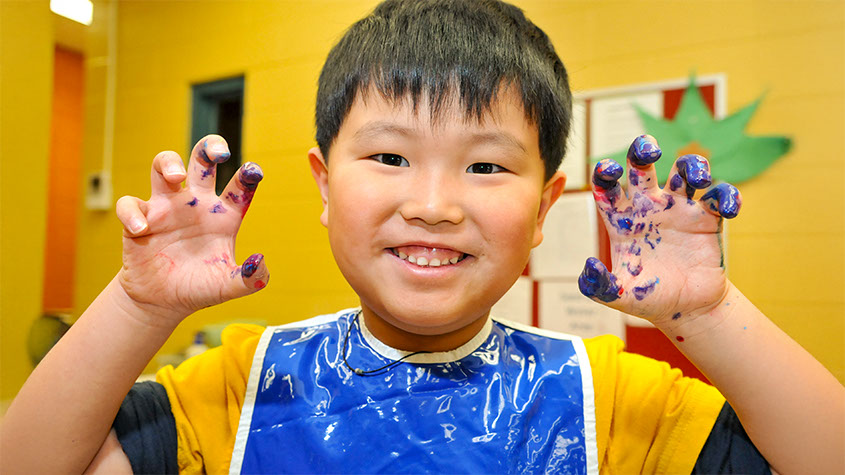
Every child is a capable communicator who expresses themselves in many ways.
What is Expression?
Expression refers to the ways in which a child communicates their thoughts, ideas, knowledge, and feelings. Through their bodies, words, and use of materials, children develop increasingly complex communication skills. It is important to understand that expression (or communication) is a reciprocal process that involves active listening. Opportunities to explore materials support creativity and problem-solving. The foundation for literacy starts with language-rich environments that support emerging communication skills.
How We Foster Expression at PLASP
At PLASP, we value and encourage every child’s unique voice. Our programs create caring, inclusive environments where children feel confident to share their ideas, stories, and perspectives in many different ways.
Educators listen closely to children’s words, gestures, and creative expressions, responding and building on what children share. When visiting a program, you will see a variety of materials and areas set up for children to explore their own creative ideas and outcomes. Children are offered a variety of open-ended materials and experiences such as drawing, painting, building, music, pretend play, and storytelling to represent their ideas, experiences, and understanding of the world.
Expression is woven into all areas of learning. Children work individually, in small groups, and as part of the larger community, strengthening their ability to communicate, collaborate, and problem-solve. We support them in taking risks with their ideas, experimenting with new forms of expression, and reflecting on their work.
We often hear of children expressing how much they want to stay in our programs when families arrive to pick them up, as they are so engaged in an exciting activity with their friends. When this happens, we know we have made a difference.
How You Can Help Build Expression
- Stay engaged with their learning: Connect with our program educators to learn how your child enjoys expressing themselves and build on these experiences at home.
- Share meaningful conversations together: Give your child your full attention, listen carefully, and respond in ways that show you value their ideas. If your child tells you about a game they played, you may ask follow-up questions like, “What was your favourite part?” or “How did you come up with that idea?”
- Encourage different ways of communicating: Support your child in expressing themselves through speech, writing, movement, art, music, and play. If your child is interested in animals, they might draw pictures, act out movements, make up a song, or write a short story about them.
- Create rich language experiences: Read together, tell stories, sing songs, and share rhymes to build vocabulary and communication skills. Read a bedtime story, for example, and pause to ask, “What do you think will happen next?” or “Why do you think the character feels that way?
- Model respectful communication: Show how to take turns in conversation, listen actively, and respond thoughtfully to others. During family discussions, make eye contact, wait for each person to finish speaking, and acknowledge their ideas before sharing your own.
- Talk about feelings and perspectives: Help your child name their emotions and consider the feelings and viewpoints of others. For example, “It sounds like you’re feeling frustrated because your tower fell down. How do you think your friend felt when it happened?”